Texture matching · Brevard County, FL
Drywall texture matching in Brevard County, FL
Texture is where most repairs are won or lost. Orange peel, knockdown, skip trowel, and smooth, matched across Brevard County so patches, ceiling repairs, and remodel tie-ins blend into the surface around them — under real Florida light, not just in photos.
Know your wall
The fine spatter on most Brevard walls from the 1980s on — matched by tuning spray pressure and droplet size, then blended past the repair so there's no density seam.
Spatter flattened with a knife while wet, the signature of 1990s–2000s builds around Viera and Palm Bay. The knock timing controls the pattern; the match lives or dies on it.
Applied by hand, so the original finisher's motion is part of the pattern. Matching means reading that rhythm and reproducing it — the most craft-dependent blend on the list.
Nothing to hide behind: smooth shows everything, especially under low afternoon sun. Repairs get skim-coated and sanded wide, then primed so sheen stays even.
Why blends fail
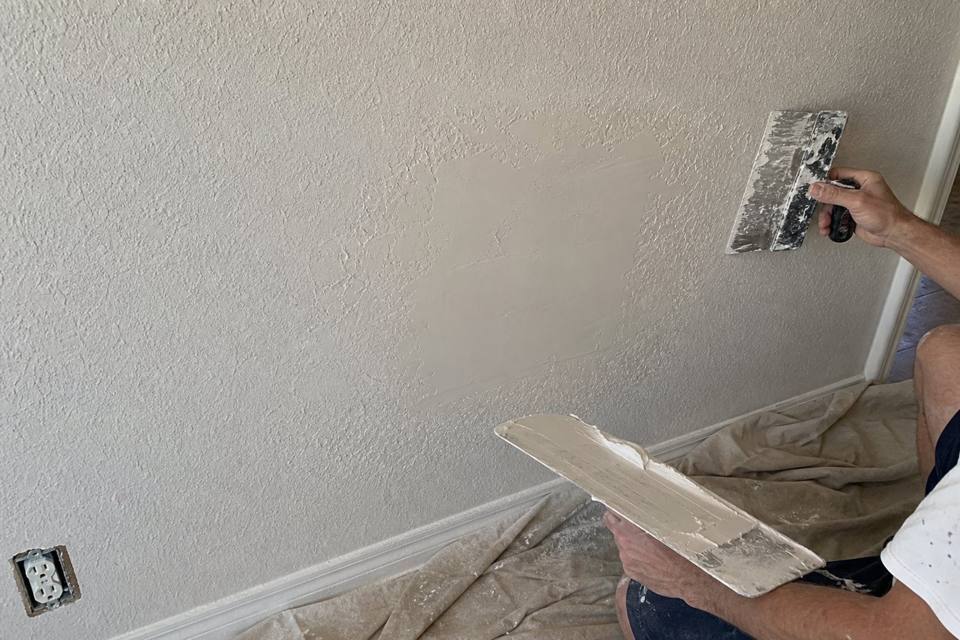
Three reasons, almost always. Blend area: texture sprayed only over the patch creates a visible density change — it has to feather into the surrounding field. What's underneath: if the compound wasn't flat and wide, texture just decorates a bump. Paint prep: unprimed repairs flash even when the texture match is perfect.
Brevard supplies the examiner — strong, low light through sliders that rakes across walls every afternoon. Every blend here gets judged against that light, because that's the light you live in.
Older homes, honestly: heavy textures from before the early 1980s may contain asbestos and get tested before sanding or scraping. A small step that changes nothing about the outcome and everything about doing it safely.
Texture matching questions
Can any texture really be matched?
The common Florida textures — orange peel, knockdown, smooth — match well in practiced hands. Hand-applied skip trowel carries the original finisher's rhythm and takes more skill, and a heavy older texture sometimes argues for refinishing the wall plane to a natural break instead of spot-blending. You'll get an honest read on which you have.
Why did my last patch show even though it was textured?
One of three misses, usually: texture applied over too small an area to blend, compound underneath not feathered wide enough, or paint without primer so the sheen flashes. The fix opens the blend area wider — annoying, but routine.
Should I just go smooth instead of matching?
Sometimes genuinely yes. If the texture is dated and you're repainting anyway, skimming a wall or room smooth can cost comparable money to a difficult blend and modernizes the surface. Worth pricing both ways — ask on the call.
Request texture matching help
Describe what the texture looks like — bumpy, flattened, swirled, or smooth — and which room it's in.
Have a patch or repair that keeps showing?
Texture matched, compound feathered, edges primed — so the repair reads as wall.